
How many phone calls did it take you to find out yesterday's production?
If you are like most steel fabrication owners I meet, the answer is three. You called the plant head, who asked the supervisor, who checked with the person who maintains the Excel. By evening you had a number — for a day that was already over.
Now the uncomfortable part. While you were making those calls, the owner of another fabrication company simply typed on WhatsApp — “Yesterday's production?” — and had the answer in seconds. 486 MT. Built-up 312, cold form 98, sheeting 76.
Same industry. Same steel. Same margin pressure. A completely different way of running the business.
I have spent the last nine years building software only for this industry, working inside 115+ PEB and steel fabrication companies across India and now Saudi Arabia. And the change I see in the best-run plants is not some grand “digital transformation.” It is quieter than that, and honestly, more moving to watch:
Owners are getting their evenings back. And decisions are moving faster than problems.
Here is what actually changes when a fabrication company stops running on follow-up calls.
1. The numbers stop hiding
In a plant running on Excel and WhatsApp groups, every number lives inside somebody. Production is with the supervisor. Stock is with the storekeeper. Outstanding is with accounts. To see your own company, you have to call your own employees — and wait.
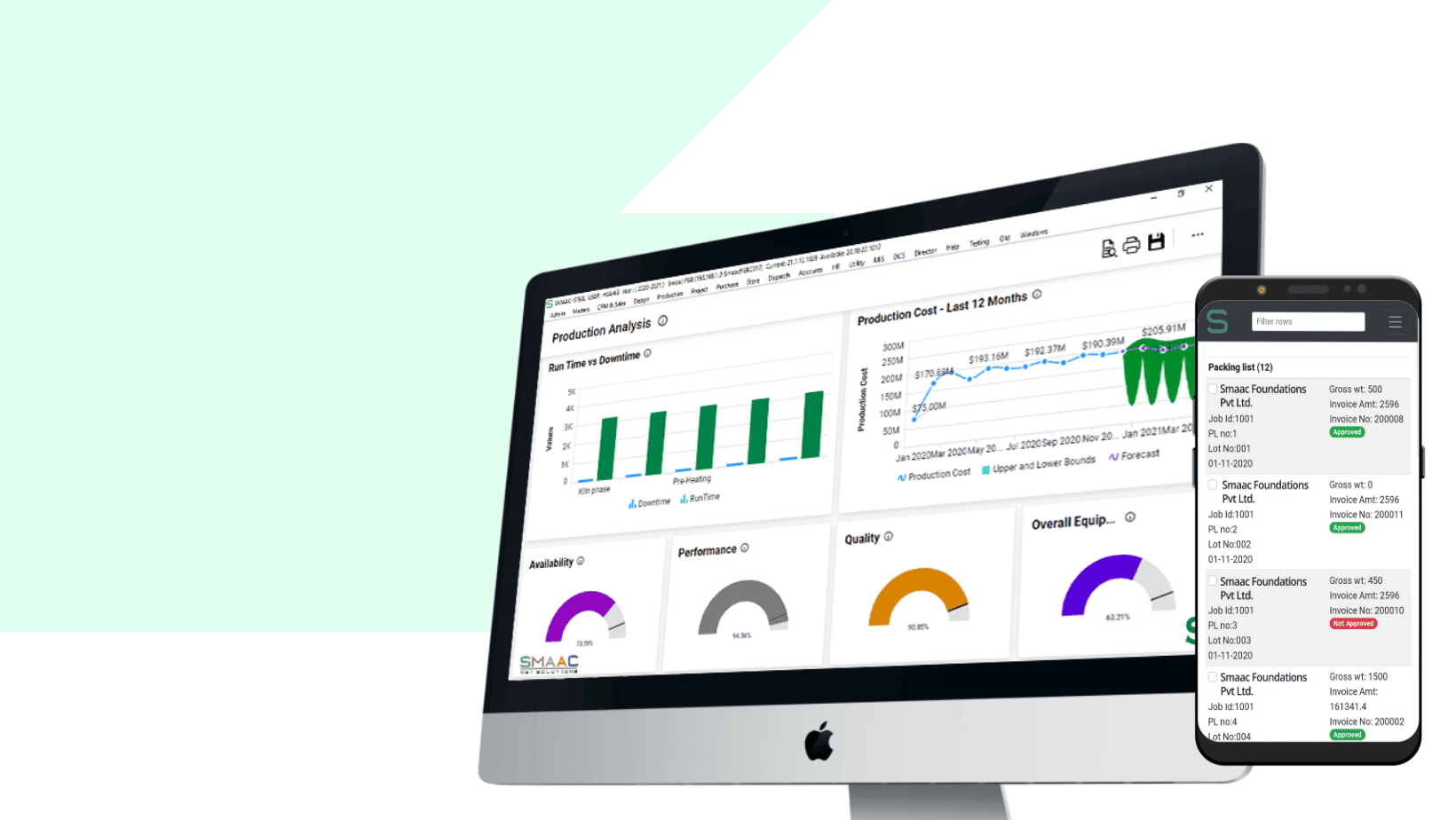
In a connected plant, the day looks different. Over morning tea, the MD asks yesterday's production. Before releasing a PO, the purchase head asks 10mm plate stock. From the site, the in-charge asks when the next load reaches. Each answer comes in seconds, from live data — on WhatsApp or the mobile app, in plain words.
No dashboards to learn. No “I'll check and get back to you, sir.”
The most common thing owners tell me after the first month is not about any feature. It is: “I didn't call the plant even once today.”
2. The sales order becomes a wall, not a wish
Six years ago I wrote an article saying every fabricator should build one check: the design team should not be able to release a BOM heavier than the sales order tonnage without approval.
Back then it was advice, done manually if at all. Today, in these companies, it is a rule the system enforces silently. The shipping list crosses the order weight — it stops and asks for approval. Freight booked till date crosses the freight in the sales order — an alert goes out before the next truck is placed, not after the project closes.
If your contract allows a −3% weight variation without deduction, dispatches are planned to use it. If +3% is billable, not a kilo goes unbilled. In an industry where net margins are thin, these tolerances are not fine print — they are the margin.
None of this needs a bigger team. It needs the checks to run without you remembering them.
3. Dispatch stops running on memory
Every fabricator has lived this: the truck left, and one bracing, one pack of sag rods, did not. Now a crane and an erection gang stand idle at site, waiting for 40 kg of steel.
In a connected plant, the packing list is QR-coded. A part that is not approved, not for this ship lot, or already sent simply does not get loaded — the scan refuses it. And before any dispatch is planned at all, a dispatch advice moves through approval: billing done, payment received, erection contract status, anchor bolt casting status. If the payment terms are not met, accounts declines it right there — politely, automatically, before the material leaves your gate instead of after.
4. The site stops being a black box
For years I watched project teams do the same ritual: print the 3D drawing, and colour parts with a highlighter. Yellow for produced. Green for dispatched. Another colour for erected. Every week, a fresh printout, a fresh hour with the highlighter.
I found it fascinating and painful at the same time. So we made it automatic.
Today those companies upload the 3D drawing and see every part colour-coded live across production, dispatch and erection — grid-wise, direction-wise, phase-wise. The site engineer updates erection from a mobile app standing next to the structure. The plant, the office and the site look at the same picture, and nobody argues about whose Excel is latest.
5. The company stops depending on where you are
This is the real change, and it is the sum of all the others.
Ask yourself honestly: if you did not enter the office for a week, would you still know your production, your dispatches, your site progress, your overdue payments — to the ton and to the rupee?
For most owners, the honest answer is no. The company runs because they are physically present, chasing. That is not a system. That is a person holding up a structure with their hands.
The companies that changed this did not work harder. They moved the chasing into software — 27.8 lakh+ tons of steel and 14,600+ projects now run this way — and put their own attention where it actually earns: customers, pricing, expansion, and yes, dinner at home.
What are you actually missing?
Not a feature. Not a report. You are missing the compounding.
One unbilled weight tolerance. One truck sent before the anchor bolts were cast. One evening lost to follow-up calls. Each looks small. Multiply by every job, every month, every year — that is the gap between two fabricators who buy the same steel at the same price.
Steel is heavy. Running a steel company doesn't have to be.
- Let the numbers come to you — don't go chasing them.
- Make the sales order a hard boundary, not a reference document.
- Dispatch on approvals and QR codes, not on memory.
- Give the plant, office and site one picture of the truth.
We at Smaac have built Smaac Steel ERP only for the PEB and steel fabrication industry — from enquiry to erection, with Tekla/MBS import, Tally and other integration, and now AI you can simply talk to on WhatsApp. 115+ fabrication companies run on it today, and implementation takes weeks, not years. If any part of this article felt uncomfortably familiar, that discomfort is worth a conversation.
Akash Gupta builds Smaac Steel ERP at Smaac Net Solutions Pvt Ltd. He writes about systems, margins and the unglamorous details that decide profitability in steel fabrication.